
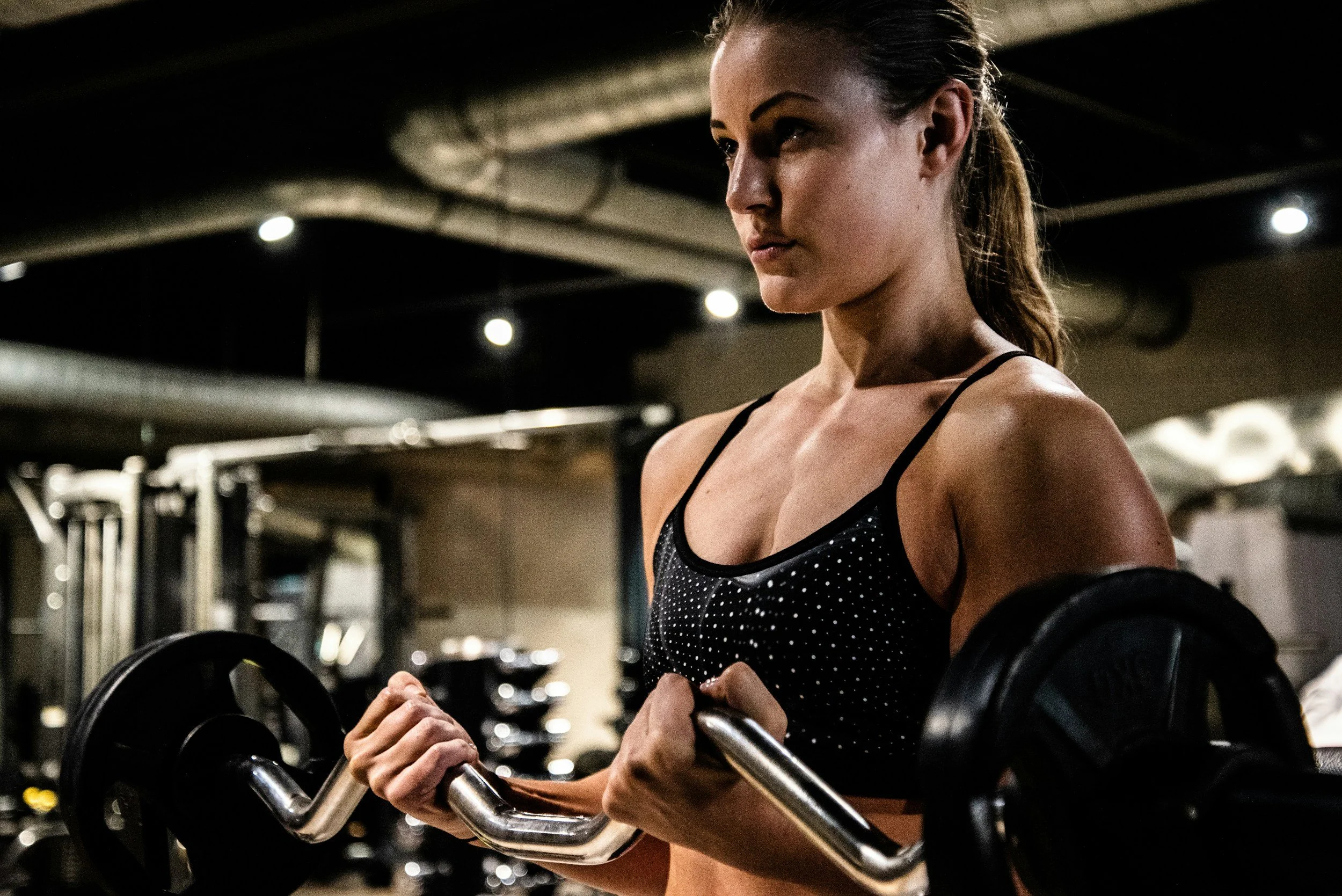
Strength Training for Women
Written for you, coached every week, and built to start exactly where you are - including from zero.
Strength Training for Women
What strength training for women actually involves.
Strength training for women is the same training men do: a small number of compound lifts, loaded heavily enough to be hard, and progressed every week. There is no separate women's method and no lighter version that works better. What differs is where most women start from - later, with less instruction, and with more people watching.
So this page is about the starting, because that is the part almost nobody writes honestly about. The lifting itself is simple. Walking into the weights section the first time is not.
What actually stops most women starting.
Not knowing what to do. Not fitness, not willpower - information. You can be fit enough to teach a hot yoga class and still have no idea what to do with a barbell, because nobody has ever told you. A written plan fixes this in one week.
The weights area feeling like someone else's room. It is a real thing and it is not in your head. What changes it is not confidence arriving from nowhere; it is walking in with a plan that tells you exactly which rack you need and for how long.
Being afraid of doing it wrong in public. Reasonable, and the fix is not to guess harder. You film a set, I watch it, and the correction happens between us instead of in front of a room.
Starting at zero while everyone else looks experienced. Everyone in that room started at zero, most of them recently, and the ones who look like they know what they are doing are usually just following a plan too.
Will lifting weights make me bulky?
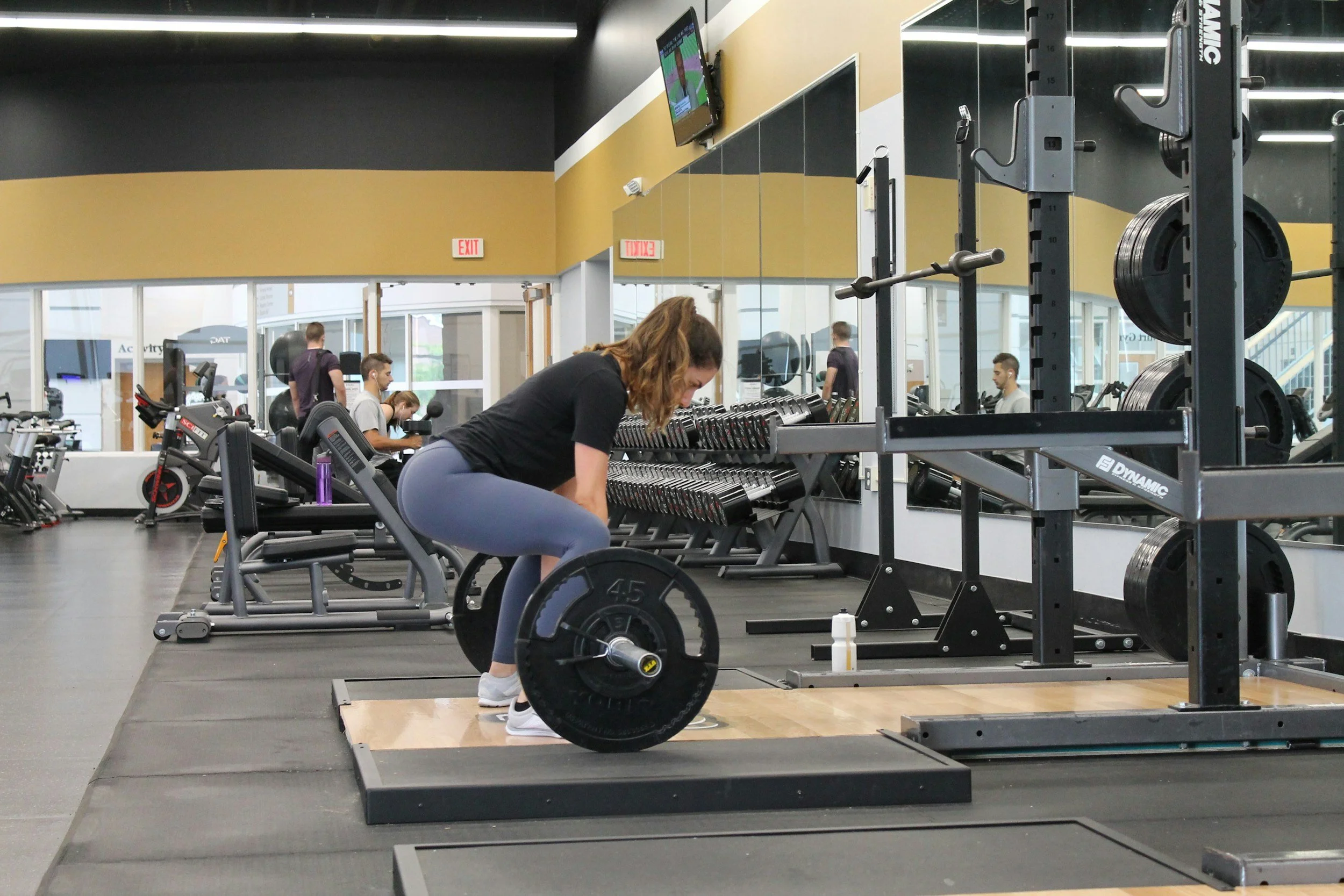
No. Building large amounts of visible muscle takes years of deliberate high-volume training, a calorie surplus maintained on purpose, and a hormonal profile most women do not have. It does not happen by accident, and it does not happen from two or three sessions a week.
What two or three sessions a week actually produces: denser muscle rather than more of it, noticeably better posture, more strength for everything outside the gym, and clothes fitting differently rather than a different silhouette. Most women who lift for a year describe looking like themselves, but solid.
The reason this question persists is that the fitness industry spent thirty years selling women light weights and high reps as their special version, and then had to explain why nothing changed. The honest answer is that heavy is the point, and heavy is relative - your heavy is whatever makes the last two reps hard today.
What your first month looks like.
Week one - learn the lifts, on purpose, too light
Five movements: a squat, a hinge, a press, a row and a carry. Loads that feel almost embarrassingly easy, because the job this week is learning what a good rep feels like. You film one set of each and send it to me. This is the week that decides whether the next two years go well.
Weeks two and three - start adding weight
Small increases, every session where the last set still looked clean on video. This is where it stops feeling like a lesson and starts feeling like training. Most people are surprised how quickly the weight moves in the first month - beginners progress faster than anyone else, and it never feels that fast again.
Week four - the first honest check
We look at what actually happened: what you lifted, what you skipped, what felt wrong. Then the plan changes to match the real answer rather than the one it assumed. That check is the difference between a program and coaching, and it happens every week from here.
Where to go from here.
If you are over 40
Everything on this page still applies, and there is more to say. Perimenopause and menopause change what your body does with training, and bone density becomes a reason to lift rather than a side effect. That is its own page.
If you want to compete, or train like it
Squat, bench and deadlift, programmed to peak. You do not have to enter a meet to train this way, and plenty of people never do.
If you are past 60, or training alongside a parent
Strength and balance together, with goals measured in stairs and grocery bags rather than kilos.
Who is coaching you.
I am Maggie. I competed in powerlifting - my results are public on OpenPowerlifting - and I teach yoga, which means I have spent years watching how different bodies move and where they get stuck. I write every program myself and I coach women across Canada, most of whom had never touched a barbell when they started.
I do not compete any more. I lift for my health now, which is the same reason most of the people I coach lift. What I kept from competing is knowing how to build the plan that gets you there.
Coaching is $180 a month.
Everything included: your written program, weekly check-ins, video form review, and every revision along the way. Month to month - no long contracts. Nutrition coaching can run alongside it for $40 more, which is $220 for both rather than $260 bought separately.
Questions women ask me before they start.
-
With five lifts and a weight that feels too easy. Your first week is deliberately light, because the job that week is learning what a good rep feels like, not finding out what you can move. You get a demo video for every movement and you send one back so I can correct technique before it becomes habit. Nobody starts knowing this.
-
Two or three. Two sessions done properly and progressed every week beat five rushed ones you end up resenting, and two is the number most people can actually protect when work gets busy. If you have more time later we use it; the program is built around the week you really have.
-
Either. Your program is written around the equipment you can actually get to - a full commercial gym, a rack in the garage, or a pair of adjustable dumbbells. Tell me what you have on the consultation call and the plan is built to that, not to a gym you would have to join first.
-
It goes away faster than you expect, mostly because you stop improvising. Walking in with a written plan that names the lift, the sets, the reps and the weight removes the part that actually feels exposing - standing in the middle of a gym deciding what to do next. Within a few weeks the weights area stops being someone else's room.
-
The training is the same; the emphasis is different. This page is about starting and building - technique, confidence, getting strong. The over-40 page adds what changes with menopause and what strength training does for bone density, which becomes the more urgent question in your forties and fifties. If both describe you, start there, and you will not be missing anything from here.
-
Then you are not a beginner, you are a returner, and that is a different plan. Returners regain strength faster than they built it the first time, which is genuinely one of the fairest things about this sport - but the first block still starts lighter than your ego wants, because tendons and technique come back slower than confidence does.
Start where you are.
The consultation is free and takes 20 minutes. You do not need to have done any of this before, and you do not need to know what to ask - that is my job. You will leave knowing what your first block of training should look like, whether or not I am the one writing it.